
AI Control Panel
Monitoring System
AI reads indicator lights, switches, valve positions, HMI displays, and all control panel states from CCTV cameras — turning visual data into digital signals instantly.
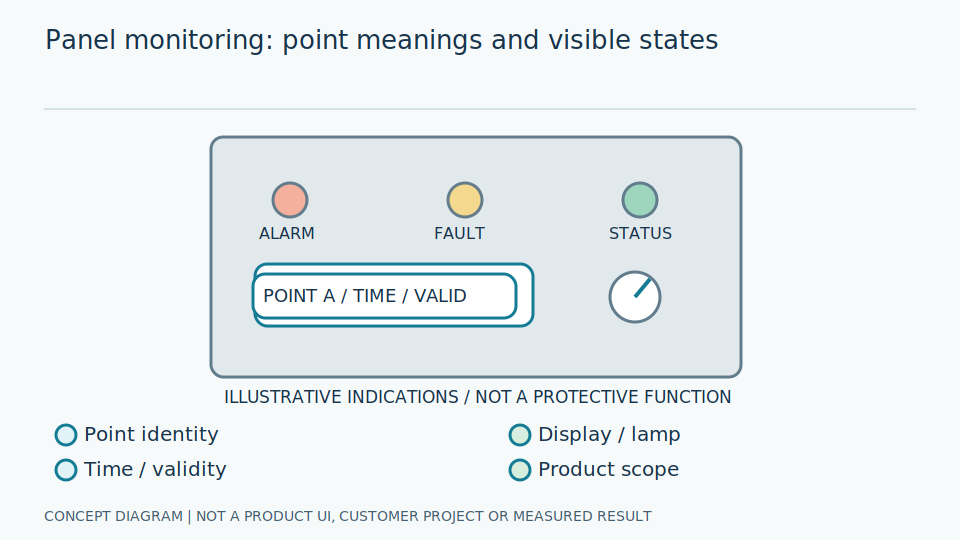
Conceptual illustration, not a product screenshot or measured result.
Usage Context and Data Preparation
A control panel can contain lamps, switches and displays with different meanings. Interpret colours and switch positions using the point names and rules for that panel, rather than assuming that a colour or position means the same state on every machine.
Prepare panel images, point names, expected states and the meaning of blinking or display-page changes. For valves, identify the visible indication and the intended open/closed interpretation. External observations support monitoring and historical review but do not prove internal operation or replace direct control signals.
Map panel positions to names and meanings such as ready, fault or display mode. The same color on different panels may represent different states. Verify documentation and responsible operators instead of applying a universal color rule across every machine.
Ambient light and reflections can make dark lamps appear lit or dim lamps appear off. Test varied light and transitions. One frame cannot establish blinking behavior; define observation windows appropriate to the intended monitoring responsibility and actual equipment behavior.
Switches and valve indicators show external positions, not internal contacts or actual flow. Use conclusions matching the evidence, such as visible indicator position, rather than declaring complete operation. Tasks needing internal verification require other signals and responsible inspection methods.
Report each panel point with its own identity, time and quality. Do not declare an entire panel normal because only some points are readable. Camera movement needs position-reference checks because unchanged software can otherwise read a different nearby indicator.
Compare states with operator-confirmed references, including transitions and incomplete visibility. Report missed and false observations by point rather than averaging away important unreadable indicators. Test recovery and delayed data so old states cannot appear current without explanation.
Blink tracking, histories and rule-based alerts are proposals pending confirmed scope and tests. Image-derived status supports monitoring, not replacement of PLC, contact or protective-circuit signals. Assign responsibility for reconciling observations that disagree with actual site conditions.
Key Features
Indicator Light Detection
Read ON/OFF/blinking states of industrial Stack Lights, Tower Lights, and Pilot Lamps.
Switch Position Detection
Read Selector Switch, Toggle Switch, and Rotary Switch positions from camera feed.
HMI/Panel Display Reading
Read numeric values from Panel Meters, HMI Displays, and 7-Segment screens via AI OCR.
Valve Status Detection
Read Open/Close positions of Valves, Actuators, and Dampers from camera images.
Anomaly Alerts
Detect abnormal state changes and send instant notifications to operators.
Centralized Dashboard
View all control panel states factory-wide on a single screen with full historical data.
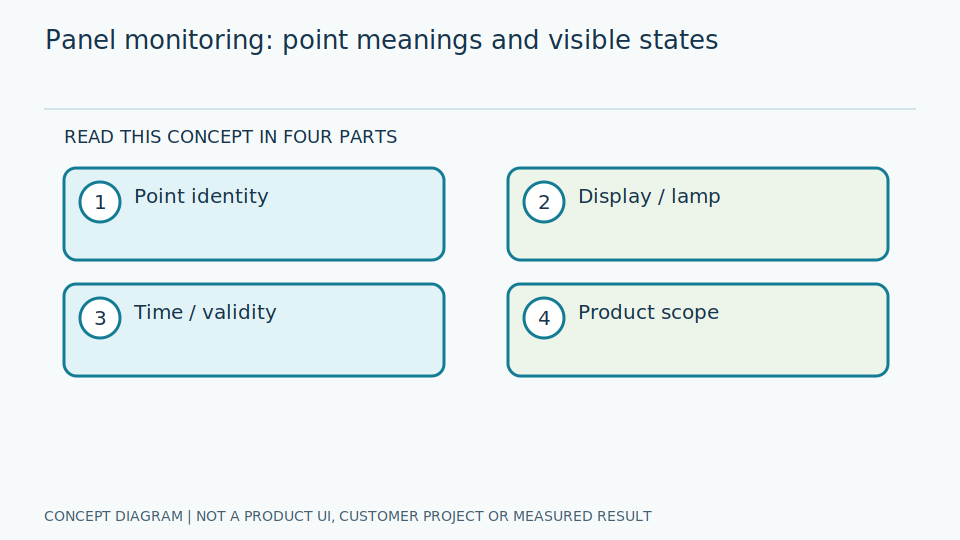
Scroll the diagram horizontally to inspect all details.
Key Benefits
See Everything from One Place
No need to walk to multiple control panels — monitor everything from a central dashboard.
Faster than Manual Rounds
AI scans every 1-5 seconds — far faster than walking inspection rounds.
Automatic 24/7 Logging
Record all states continuously. Use as evidence and for trend analysis.
No Equipment Changes
Use cameras to read existing panels. No need to modify electrical or PLC systems.
Technical Specifications
| Item | Specification |
|---|---|
| Accuracy | > 98% |
| Detection Speed | < 2 seconds |
| Detectable States | ON/OFF, Switch Position, Numeric Values, Colors, Blinking |
| Points per Camera | Up to 30 points |
| Supported Cameras | IP Camera 2MP+ (RTSP/ONVIF) |
| Connectivity | REST API, MQTT, Modbus, LINE Notify |
Suitable For
Related articles and knowledge
Vision AI Knowledge Library
Start with image interpretation, event information and evidence-backed retrieval.
Read MoreDetection and Event Indexing
Define identifiers, time, attributes and data lifecycle before choosing an index.
Read MoreNatural-Language Search
Separate objects, attributes, relationships and questions requiring confirmation.
Read MoreHybrid and Multimodal Retrieval
Combine filters and vectors without assuming similarity proves every condition.
Read MoreSearch Evaluation and Governance
Evaluate relevance, evidence, permissions and information missing from an index.
Read MoreRelated Content
Face Detection & Recognition System
AI-powered face detection and recognition system for access control and security.

License Plate Recognition (LPR) System
Automatic license plate reading system for parking management and vehicle access control.
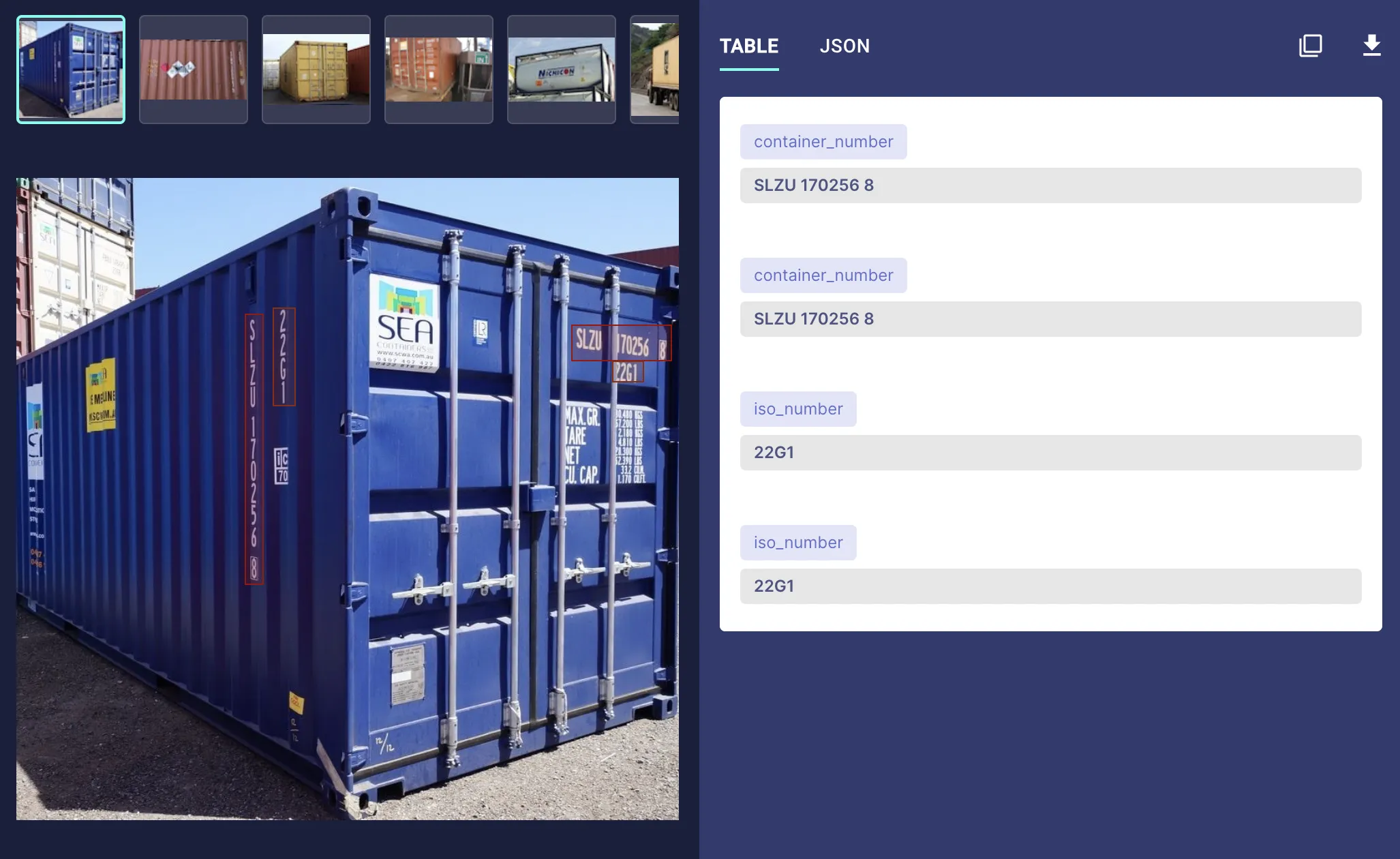
Container Code Recognition System
Automatic container code reading system for logistics and port terminal management.
Interested in AI Vision for Your Organization?
Contact us for a free consultation and live system demo.