
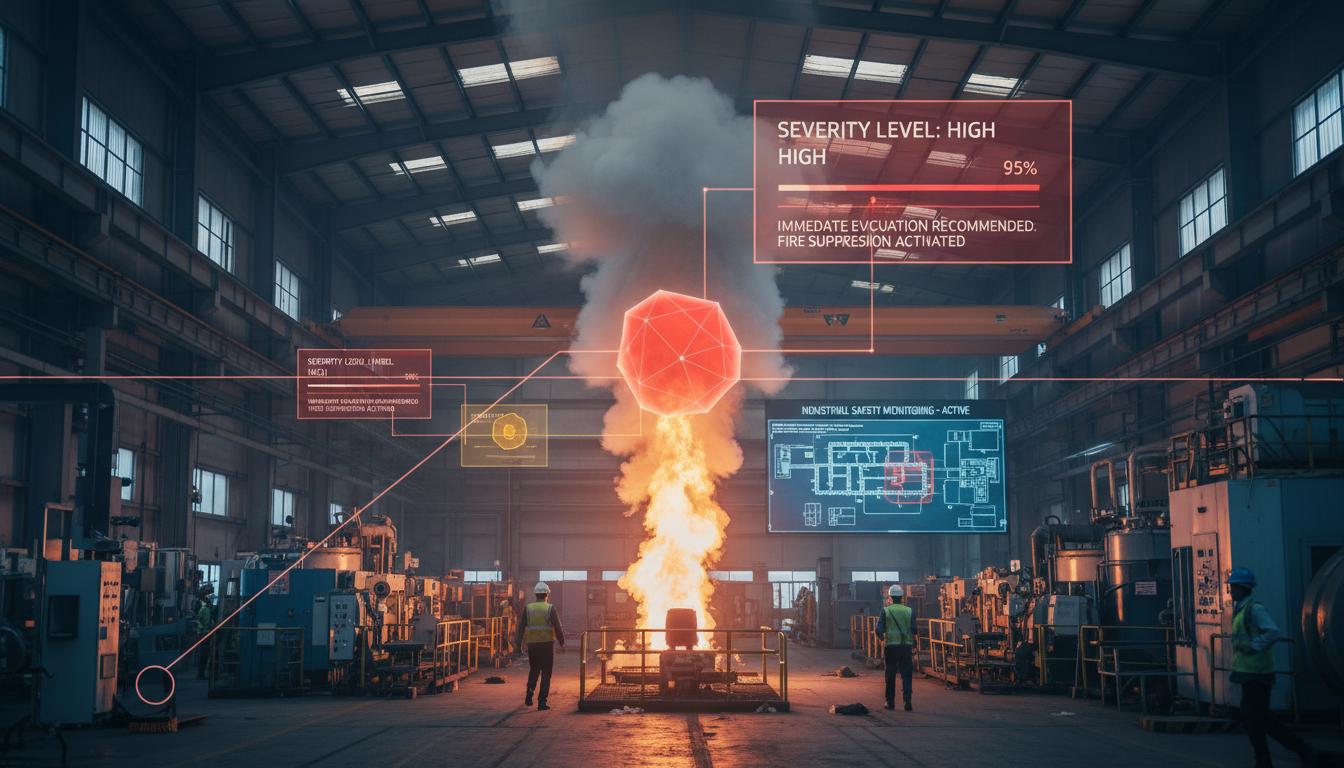
Principles, Scenarios and Suitability
Images can screen visible appearances resembling smoke, flames or liquid leaks. These are different signals and need separate assessment. RGB images do not confirm invisible gases and are not certified fire-detection instruments.
Smoke, flames and liquid patches differ in appearance and change over time. Do not combine them into one event and claim one result. Images suggest something to inspect, not confirm substance type or every hazard. RGB is colour information, not gas or temperature measurement. No image alert does not mean no event; visible steam does not prove fire smoke.
Engineering must define actual visible coverage, lighting and interference such as dust or reflections. Multiple frames reduce transient-image events but add time. Choose according to the task without delaying primary response. Future alerts should provide images, time and uncertainty for operators, while retaining risk-selected detectors and emergency plans. Supplementary information is not a protective function or safety instrumented system, or SIS.
Scroll the diagram horizontally to inspect all details.
Illustrative Design Scenario
Illustrative design scenario: flag a new wet patch near piping for review. It may be cleaning water or a reflection. Use existing emergency procedures to verify conditions and never wait for AI confirmation before responding to danger.
Suppose cleaning leaves a new patch that prompts an alert. Operators should review cleaning schedules and evidence under established procedures, not enter a potentially leaking area merely for close photographs. Coordinate suitable verification by responsible personnel or compare images from authorised distances. Reviewer safety matters more than completing image labels.
Use safely obtained, authorised event data, including steam, dust and lookalike shadows to expose false alarms. Never light fires, open gas supplies or release substances on site to create tests. Operators should review events and existing response routes. Danger signals from primary systems require immediate use of emergency plans, not waiting for image-score confirmation.
Inputs and Prerequisites
Prepare visible-event definitions, camera views, lighting and confounders such as steam, dust, welding light and wet floors. Do not create dangerous fires or leaks to collect test examples.
Data needs confirmed event types, times, locations, camera conditions and image-use rights. Unknown substances should retain observable labels, not invented substance names or hazard levels based on patch colour.
Results should identify the proposed appearance, image, time and uncovered areas pending review. Show unreadability and camera loss clearly. Absence of an alert must not be a safe status.
Trial and Integration Workflow
- 1Define smoke, flame and liquid events separately with relevant confounders.
- 2Test only safely obtained data with the required authorisation.
- 3Refer event images to people while retaining primary detection and emergency plans.
Evaluation and Acceptance Criteria
Measure missed events, false alarms per hour and detection time separately by event type. Check darkness, shadows and steam. State uncovered areas and do not infer risk reduction from scores on test videos.
Evaluate event intervals, not multiple frames of one fire as extra examples. Measure time from source capture to the operator separately from calculation time. Report the counts of genuinely evidenced event types in the test set.
Safety personnel should review wording and escalation routes. Simulate missing data in a separate system. Never disable primary detectors to see whether supplementary vision detects events, or claim unmeasured risk reduction.
Scroll the diagram horizontally to inspect all details.
Failure Cases and Limitations
Fire may be outside the camera view, thin smoke or gas may be invisible, and droplets do not identify a substance. Vision does not replace risk-selected detectors or an SIS, and this article claims no fire-protection certification.
Additional cameras reduce some blind spots but cannot detect substances without visual signals. Ordinary equipment may be unsuitable for hazardous areas. Competent personnel must assess installation; do not place devices near incidents merely for clearer images without approval.
Standards guide separation of functions and evidence, not certify vision as a fire system. More detection types or alerts are study proposals needing specific tests, not claims of already installed capabilities or emergency services.
Practical Checklist
- Are suitable primary detection and response systems still in place?
- Does data collection avoid creating any dangerous scenarios?
- Are false positives reviewed without delaying established emergency procedures?