
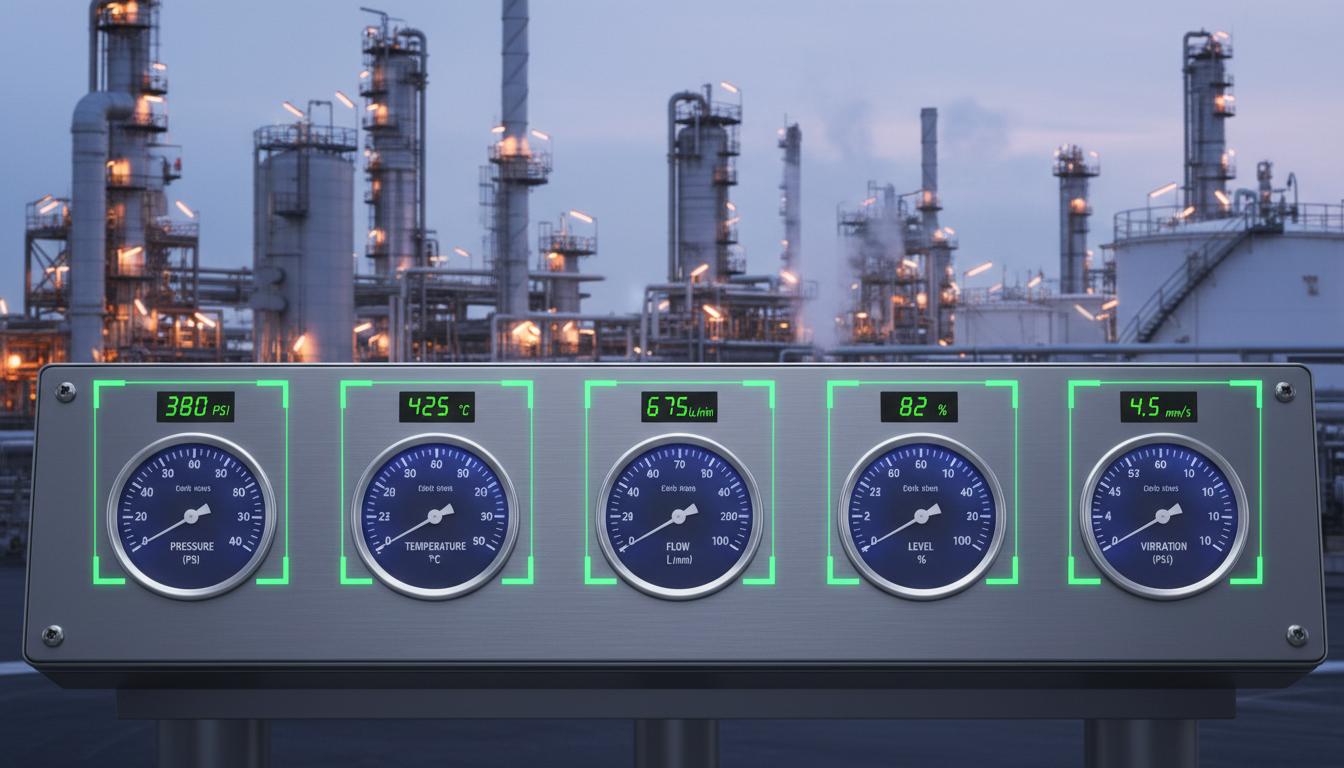
Principles, Scenarios and Suitability
Refinery data use must preserve process-unit context, operating states and protective-system boundaries. Reading existing instruments or analysing trends supplements operations; it does not replace a DCS or SIS. Changes affecting operations require management of change.
Refinery units affect one another. Read a dial alongside feedstock, load and operating mode. A DCS controls the process; an SIS performs specified protective functions. Image analysis can identify periods worth inspection, but it has no implied authority to alter controls. Smart must not be interpreted as ordinary equipment controlling a refinery.
Management of change reviews effects on people, equipment and work methods. Even a read-only camera can affect installation, power and networks. More points increase coverage but add instrument and hazardous-area assessment duties. Begin with a clearly useful question approved by the unit owner, not connections to every system before defining the scope.
Scroll the diagram horizontally to inspect all details.
Illustrative Design Scenario
Illustrative design scenario: compare differential pressure across a heat exchanger with flow to identify periods worth checking for fouling. Engineers review other process data before forming a hypothesis; images do not issue commands to change the operating envelope.
Fouling is deposited material that can reduce heat transfer or increase resistance. If differential pressure rises alongside flow, fouling is not yet established. Compare similar loads and review temperatures before prioritising inspection. Do not change live flow or valves merely to make the chart return to normal.
Existing instrument history avoids new field equipment but may lack coverage. Cameras at missing points require installation and image-quality assessment. Engineers and operators should review historical and shadow results only. Do not create blockage, high pressure or leakage to generate a test example.
Inputs and Prerequisites
Use P&IDs, tag lists, operating modes, calibration history and hazardous-area requirements. Competent personnel must assess equipment and installation methods before they are brought to the actual site.
Map tags to the correct unit, instrument and unit basis, retaining startup and shutdown records. Calibration compares an instrument with a reference; it is not simply making a model read a clear image. Both instrument condition and image interpretation matter.
Results should carry reading, quality, time and comparison conditions. Hold conclusions when operating mode is unknown or paired information is incomplete. Label proposed findings as engineering questions, not process commands or safe limits permitting continued operation.
Trial and Integration Workflow
- 1Choose a read-only use case with manageable risks and a process-unit owner.
- 2Segment networks and verify unit and timestamp mappings.
- 3Run in shadow mode and review with operators before entering change control.
Evaluation and Acceptance Criteria
Compare readings against trusted instruments by operating mode and check false alarms during startup and shutdown. Test data loss without disrupting controls. Acceptance must cover actual installation conditions and response procedures, not only analytical results.
Shadow mode generates reviewable results without controlling real work. Record suggested events and events noticed by people but missed by the system. Separate load transitions from steady operation so aggregate figures do not conceal limitations during changing modes.
Responsible personnel should verify mappings against physical instruments and installation approvals. Test communication loss in an isolated system or with simulated data. Do not interrupt a communication path used by the DCS or SIS to demonstrate supplementary monitoring.
Scroll the diagram horizontally to inspect all details.
Failure Cases and Limitations
Smoke, steam, heat and vibration reduce image quality. Ordinary equipment may be unsuitable for hazardous areas. This article establishes neither explosion-protection nor SIL certification, and does not confirm customer projects or the ability to control a refinery.
Remote readability does not verify instrument condition or its pressure connection. A frozen gauge may still look clear. Retain inspection history and reference methods. Extending to another equipment type requires renewed environmental assessment, not extrapolation from one successful trial point.
Industrial standards explain methods and obligations to be demonstrated; they do not prove ordinary equipment already qualifies. Any process-change recommendation requires plant-owner and competent-person review. This article is not a work permit or authorisation to change refinery operation.
Practical Checklist
- Has installation been assessed for the hazardous area?
- Are information systems clearly separate from DCS and SIS?
- Are changes handled through an approval process?