
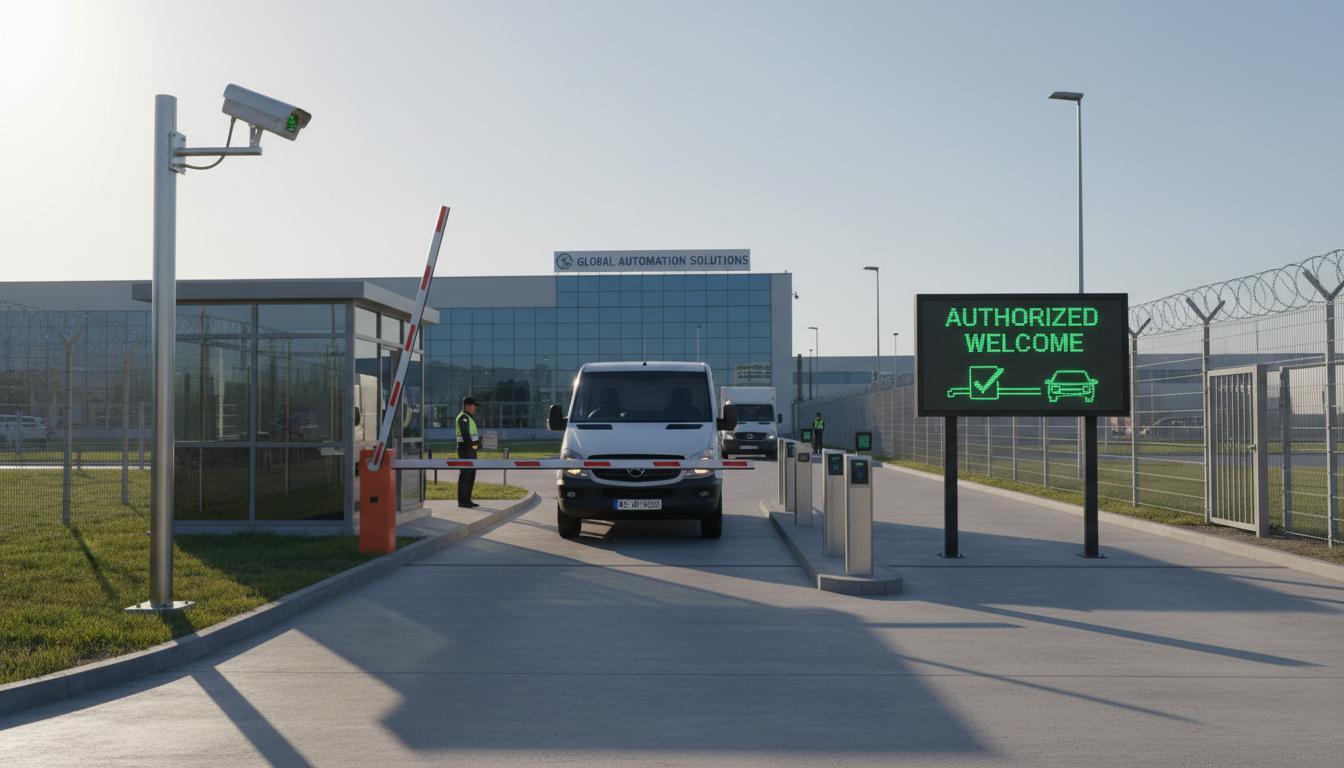
Principles, Scenarios and Suitability
Reading vehicle information at a gate can support matching against permission lists, but OCR should not directly command a gate to open. Separate identity, authorisation and the gate mechanism with its obstruction protection designed by responsible personnel.
Identity states which vehicle is claimed; authorisation applies rules such as appointments and valid periods. Correct plate reading establishes neither the driver nor entry rights. Like checking a card, both identity and permission matter, not merely readability. A plate image also does not show that the gate area is clear or free of people. Keep mechanical protection separate from image results.
Engineering must link results to a lane and one passage, with result expiry and acknowledgement conditions. Waiting for several images may complete text but adds time and risks including the next vehicle. Use passage identifiers and uncertain statuses for staff decisions from evidence, not an indefinitely valid latest result. Future gate integration requires interface and interlock checks against the actual design; OCR is not a protective function.
Scroll the diagram horizontally to inspect all details.
Illustrative Design Scenario
Illustrative design scenario: a plate reading proposes a match to an appointment. Staff check ambiguous plates or multiple candidates. Existing gate logic and sensors handle movement; plate images do not establish that the path is clear.
Suppose a partially read plate resembles two appointments. Staff should inspect the image and appointment information, not choose the first or closest-scoring candidate. Request further confirmation or route the vehicle to inspection under approved procedures. Unreadable data must not produce accusations or remove legitimate access alternatives.
With closely following vehicles, the first result must not authorise the second. Test event order and old results using a simulator or separate system. Gate specialists should review logic and protections safely. Do not use real people or vehicles as obstructions to test entrapment, or disable protective systems to simplify integration.
Inputs and Prerequisites
Provide lane locations, night lighting, permission lists, appointment times and gate interfaces. Define plate-image retention and access according to the purpose communicated to users.
An interface is an agreement for exchanging data or signals. Define response meanings and who approves access. Vehicle lists need validity periods and data owners; a past passage alone cannot confirm current permission.
Results should separate raw text, proposed matches, approval decisions and mechanism status, with passage identifiers. Plates can relate to people, so restrict framing, retention and viewer access by role. Do not disclose appointment information unnecessarily.
Trial and Integration Workflow
- 1Locate the vehicle in its lane and read its plate with source imagery.
- 2Match permission lists with explicit uncertainty and a human review path.
- 3Test authorisation transfer to gate logic without bypassing any interlock.
Evaluation and Acceptance Criteria
Measure full-plate agreement per passage and incorrect matches. Test darkness, closely following vehicles and similar plates. Specialist acceptance tests must cover old results not opening the gate and obstruction protection during closing.
Assess reading separately from permission: correct text with an expired listing must not grant entry. Test delayed and repeated responses and network recovery with simulated data. Do not trial opening and closing on active traffic routes without an approved plan.
Staff should review ambiguous results and manual operation routes. Check every approval has evidence and an accountable owner. Counting vehicles admitted is insufficient while overlooking wrong matches or entitled people rejected.
Scroll the diagram horizontally to inspect all details.
Failure Cases and Limitations
Plates may be dirty, forged or associated with the wrong vehicle; they do not establish the driver. Vision is not certified anti-entrapment protection. Staff and access procedures remain necessary during unreadable images or network outages.
A listed plate proves neither authenticity nor responsibility of the people involved. Use suitable entry procedures, not infer wrongdoing from a mismatch or collect cross-area movements beyond the purpose.
New gate models or mechanisms require specific study and tests, not claims of controlling every brand. Data integration does not establish compliance with gate or protective-system standards. Mechanical responsibility requires separate specialist review.
Practical Checklist
- Is plate reading kept separate from access authorisation?
- Are the gate interlocks preserved without any bypass?
- Is review available for ambiguous or absent plates?