
Principles, Scenarios and Suitability
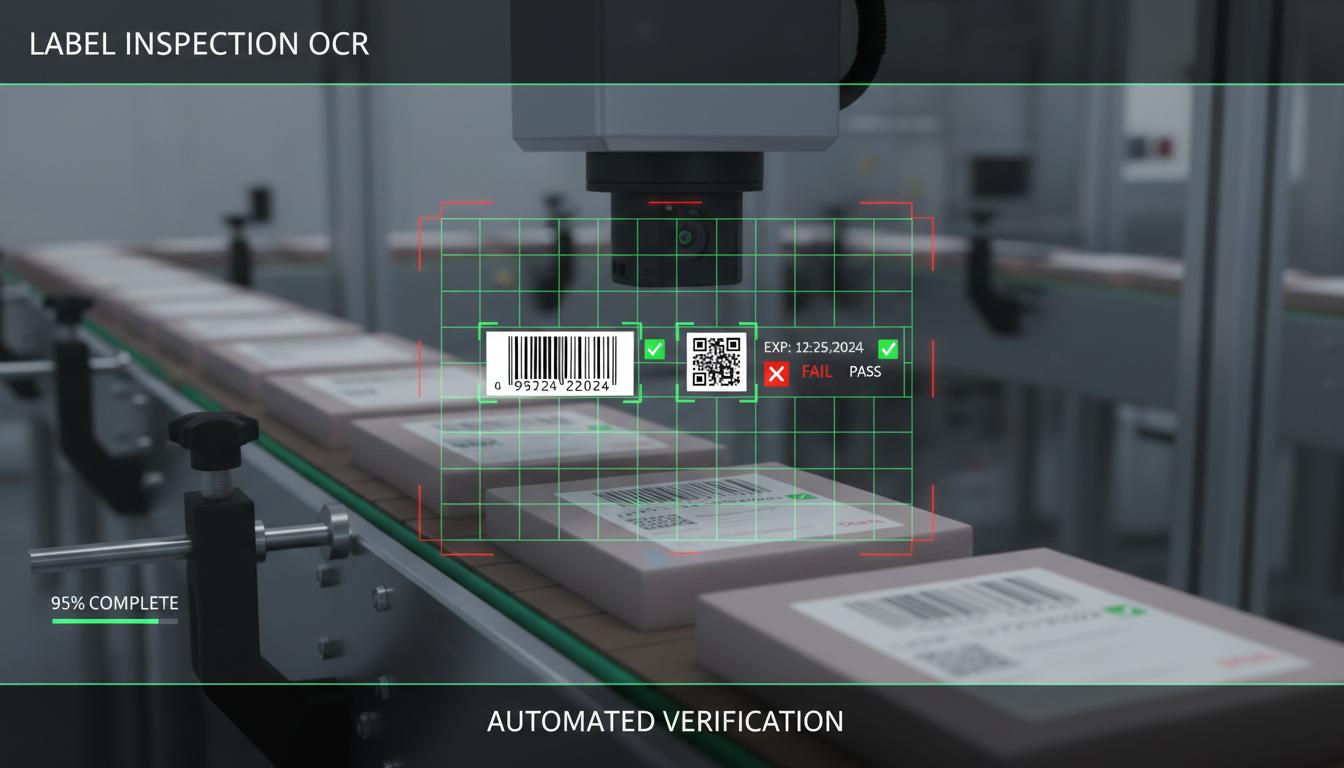
Label inspection separates presence, placement, print quality and content correctness. Readable OCR does not mean correct text. Check lot formats, expiry dates and reference data without guessing characters that are not visible in the source image.
OCR converts character images into text; a lot identifies a production group, while artwork is the approved label design. A complete date still requires knowing whether it means production or expiry and which day/month convention applies. Separate whether text is readable from what it should say. A wrong-model label may be clearly printed and correctly read in every character yet still belong to the wrong product.
Normalisation makes text comparable, for example by adjusting spaces or date representation. Keep raw text first and never fill missing digits to match a database. Restricting formats filters errors but risks making guesses look confident. Provide an uncertain status and let reviewers see the crop used for the decision, with the product-data version and reasons for passing or holding.
Scroll the diagram horizontally to inspect all details.
Illustrative Design Scenario
Illustrative design scenario: read a lot number and expiry date from packaging, then compare them with the production order. Show ambiguous digits as original image crops for review rather than silently changing them to match the database.
A hypothetical date of 03/04 could mean 3 April or 4 March. Use the convention specified by the responsible person, not assumptions based on factory location or expected text. If faint ink makes 3 indistinguishable from 8, hold for review and retain the raw result. Do not select the digit that matches the production order and report certainty.
Alternatives include changing lighting to reduce packaging shadows or moving printing to a flat area. Lighting does not change product artwork, but some surfaces remain curved. Moving the print requires artwork and process approval. Quality staff should test several label batches and wrong-model cases in simulated work, not release incorrect labels into saleable products to collect test results.
Inputs and Prerequisites
Use approved artwork, print regions, languages, date formats and model-specific master data. Prepare ground-truth examples of faint, skewed or smeared text and labels for the wrong product model.
Master data is the reference information used for comparison. Record its revision and effective date for that production order. Keep field positions and meanings: production and expiry dates are different even when their digits look alike.
Results should include raw text, normalised values, comparison reasoning and relevant image crops. Missing units or important characters mean incomplete information; do not turn a blank into the answer expected by the database. If an order changes during a shift, identify the revision used for each label. Job codes and timestamps are more useful than comparing only with current data, which could retrospectively mark a label wrong although it was correct when produced.
Trial and Integration Workflow
- 1Verify the product model and label position before locating text regions.
- 2Retain raw OCR text and scores before any normalisation.
- 3Check formats and reference records, holding uncertain results for human review.
Evaluation and Acceptance Criteria
Measure exact agreement by field and the rate of incorrect labels released, not aggregate character accuracy alone. Test similar digits, decimals and reversed day/month order, including clearly readable labels belonging to a different product model.
Exact match means the entire field is correct. Mostly correct characters are insufficient when one date digit is wrong. Evaluate reading separately from production-order comparison, using batches not used to select thresholds to assess performance beyond the original dataset.
Reviewers should sample passed labels and review held results. Verify that corrections have an accountable person and preserve raw text. Reinspection workload matters; do not reduce uncertain results by forcing guesses for every image simply to raise the readable proportion.
Scroll the diagram horizontally to inspect all details.
Failure Cases and Limitations
Curved surfaces, glare and smeared ink can remove information. A checksum catches some errors but does not establish that source data is correct. Reading a label does not certify the quality of the product inside.
A checksum is a data-format check that detects some kinds of error. A code that passes may still identify a different product model. Check production-order context and the master-data source; a checksum is not label approval.
New languages, fonts or packaging need additional testing. Images may contain trading-partner or personal information, so limit retention. Proposing inspection of multiple formats is a design approach, not assurance that every current label is supported.
Practical Checklist
- Is raw text retained before format corrections?
- Does master data match the model and production date?
- Is ambiguous text referred for human review?